
A Tiny Spider with an Incredible Trap
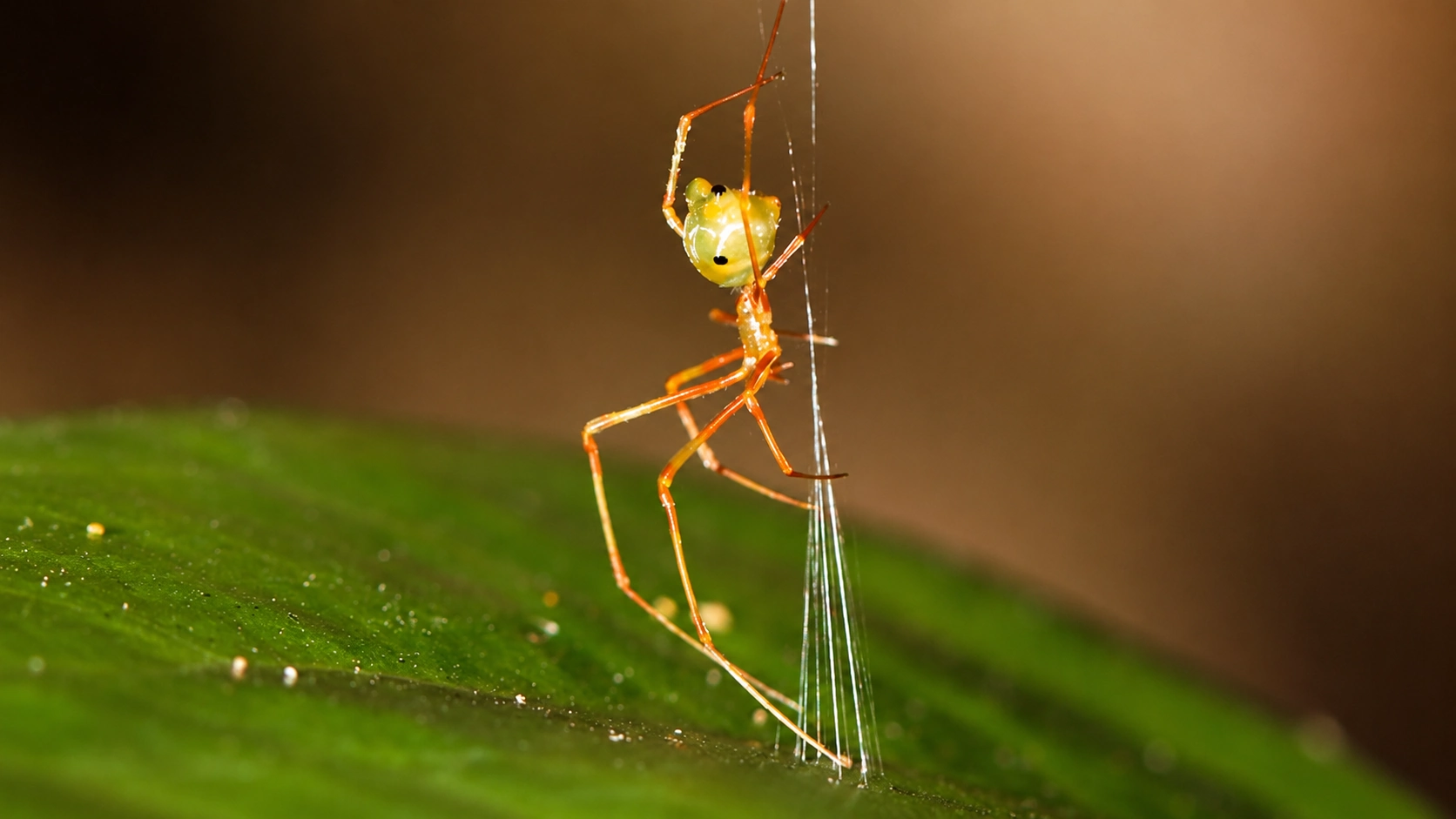
Most spiders catch insects by waiting for them to get tangled in their sticky web. But a spider was just recently discovered in the rainforests of northern Australia that hunts in a completely different way. Instead of patiently waiting for its prey to walk or fly into its web, this tiny spider builds a spring-powered catapult that launches ants high into the air and straight into its web.
Scientists nicknamed it the "ballista spider" after the ancient Roman weapon that launched bolts and stones at enemies, which was called a ballista.
A replica of a Roman capatult, called a ballista, launches a burning projectile.
Hunting One of the Forest's Toughest Insects
The ballista spider doesn't hunt just any insect. It specializes in catching only one prey: green tree ants.
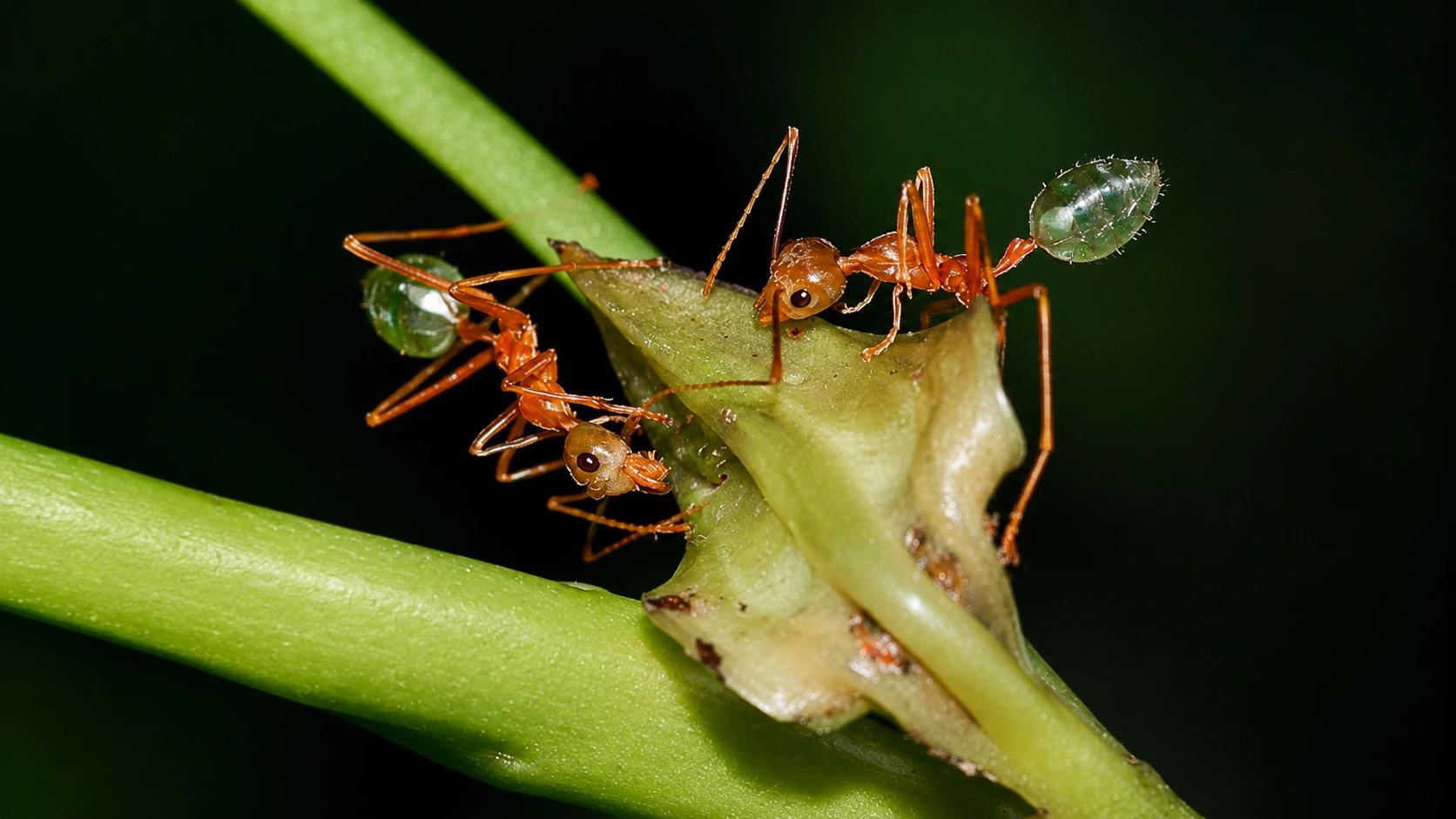
Green tree ants are strong, aggressive insects that many spiders avoid.
Green tree ants are one of the most difficult insects for a spider to attack. They have powerful jaws, strong grips, and live in huge colonies. If one ant is attacked, it can quickly call hundreds or even thousands of other ants for help. Most spiders avoid them completely. But somehow, the ballista spider has evolved a way to catch these dangerous ants one at a time.
A Trap Powered by Spider Silk
Every night, the spider carefully builds its unique trap. At the bottom of the trap, it builds a tiny cone made of silk. At the top, it builds its sticky web that will catch and entangle the ant. The spider connects the cone and the web with strands of silk stretched so tightly that they store huge amounts of energy, just like a stretched rubber band.
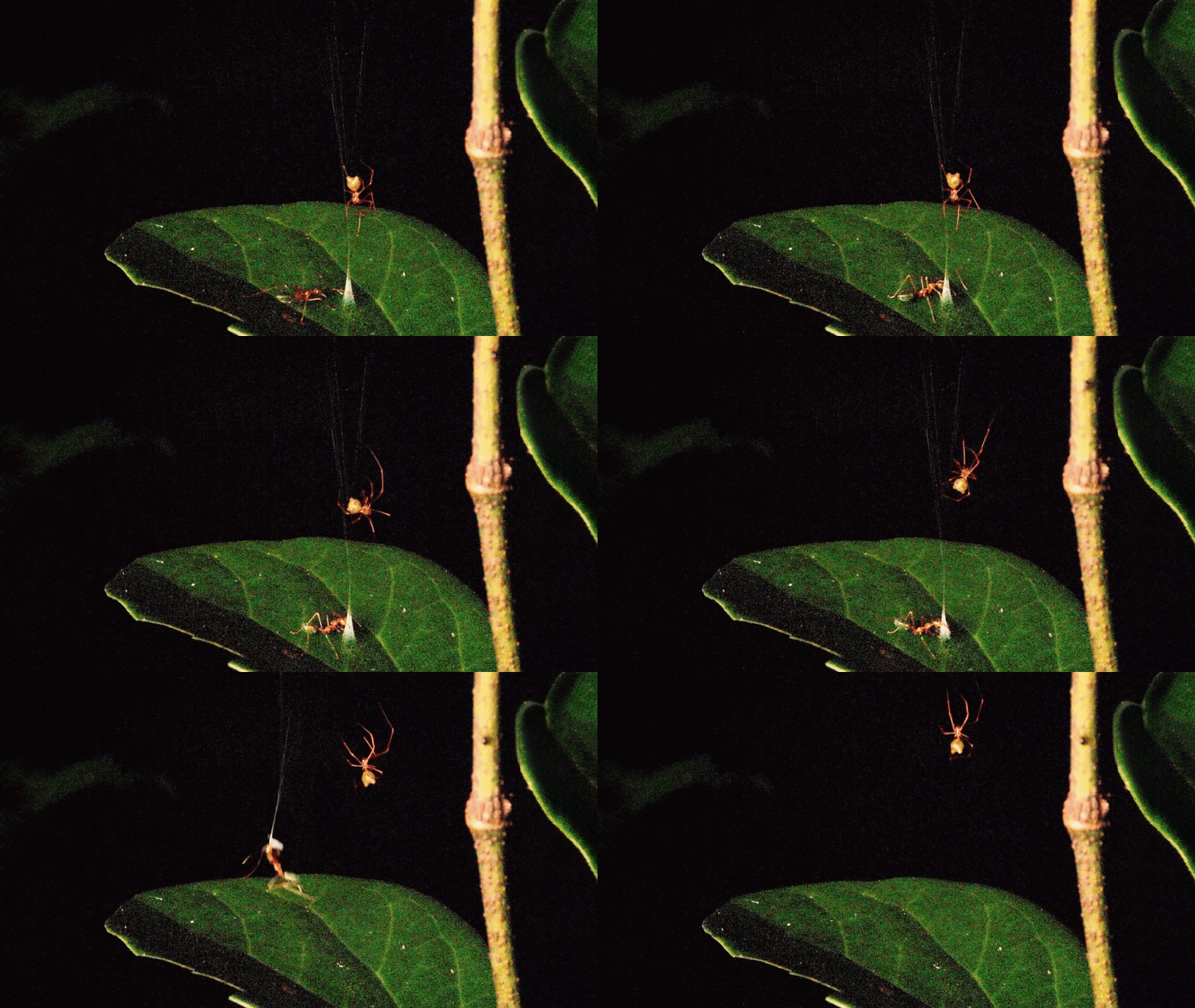
The ant is catapulted up by the ballista spider's silk trap.
Green tree ants for some reason think that the silk cone is an intruder, and they instinctively bite it. When the ant bites the cone, it unknowingly triggers the trap. The stretched silk instantly snaps upward so quickly that it rips the ant off the leaf and launches it directly into the spider's web above. Once the ant is safely entangled, the spider moves in to eat its meal.
YOUR TAKE
You’re the ant. You just landed in the web. What’s your first thought?
Choose an answer to see the results.
One of Nature's Fastest Catapults
To understand just how powerful the trap is, scientists recorded it using high-speed cameras so they could slow down the action. They discovered that the spider's trap launches the ant with an explosive burst of acceleration equal to about 140 times Earth's gravity (140 g).
Let's put that in human terms. The force you feel simply standing still is 1 g. Those giant human slingshot amusement park rides that launch people high into the air can reach about 5 g.
Human slingshot rides have a force of up to 5 times the force of gravity (5 g).
Even fighter jet pilots performing intense flying maneuvers and sharp turns usually experience no more than about 9 g.
Fighter pilots performing intense maneuvers experience up to 9 g.
The ballista spider's trap launches ants at an incredible 140 g, many times greater than the strongest forces people ever experience. The ballista spider's trap is one of the most powerful hunting mechanisms ever discovered in nature.
Vertical bar chart of g-force: slingshot ride 5 g, fighter pilot 9 g, ballista spider trap 140 g.
Power check
Comparing the force of the spider's catapult
g-force, in multiples of Earth's gravity. 1 g is the pull you feel standing still.
Why This Discovery Matters
This is a brand new discovery, and scientists have never seen another spider use a hunting strategy quite like this. Nature is full of amazing engineering, and the ballista spider may be one of its greatest inventors.
By studying how this tiny spider stores and releases so much energy using nothing more than silk, scientists hope to better understand natural materials, and even inspire new human technologies. Sometimes the smallest creatures have the biggest surprises. What other animal inventions are waiting in the rainforest, yet to be discovered?
Sources
Narendra, A., et al. (2026). Ballistic high-powered spider webs overcome dangerous prey defenses. Current Biology. https://doi.org/10.1016/j.cub.2026.04.066